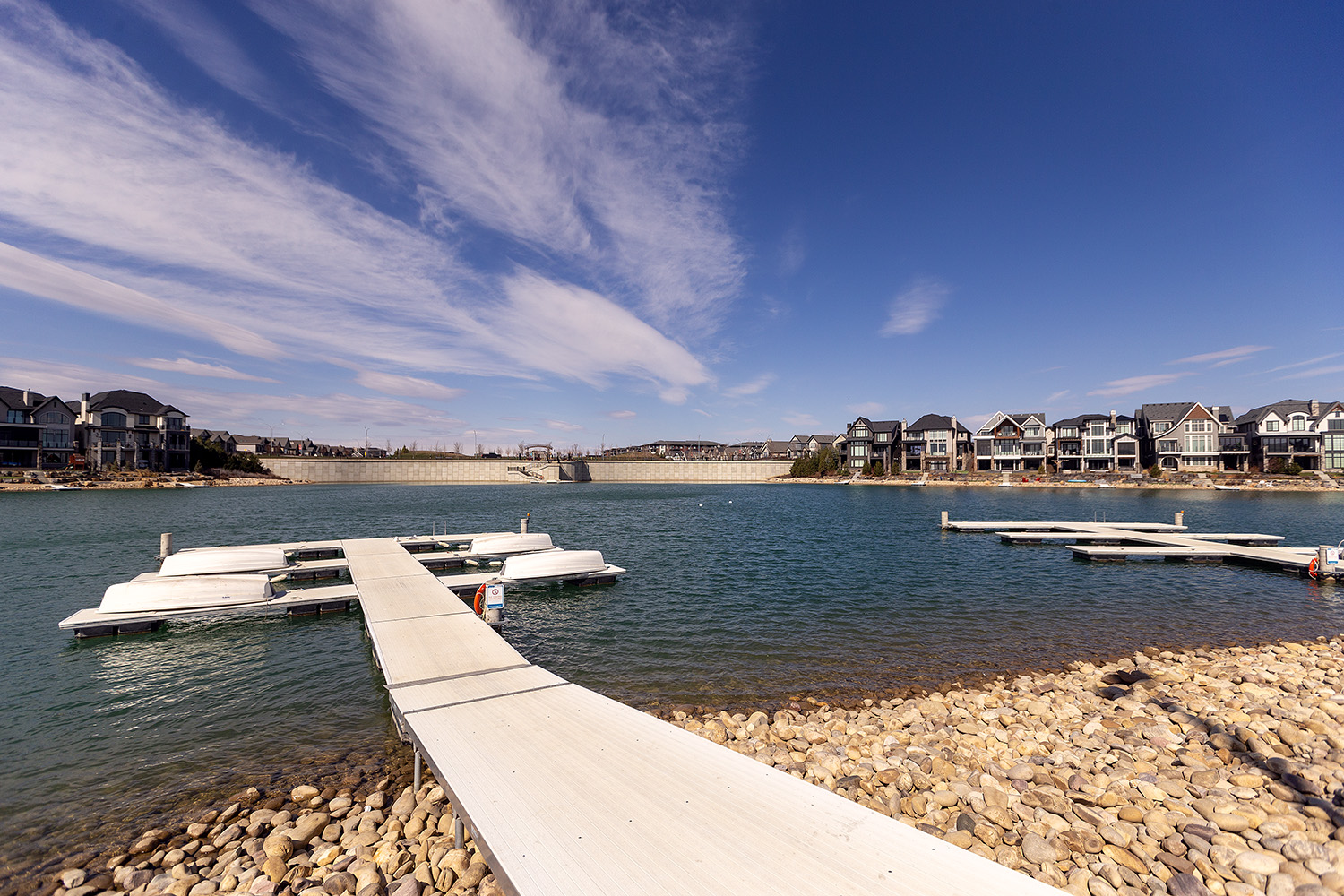
Taps shut off: Calgary lake communities can’t top up with city liquid after May 31
Calgary lake communities fed by city liquid only have another six weeks before the taps are shut off on fills and top-ups, according to the City.
The City of Calgary said Friday they are concept a water use advisory and for citizens to seek information from permanent restrictions coming by summer. That announcement came on the same day as the province outlined water-sharing agreements that could caused licence holders like the City of Calgary to cut liquid consumption by between five and 10 per cent.
According to an initial email from the City of Calgary, during the water advisory lake customers will be permitted to top up this spring pending May 31, unless water restrictions are enacted. If that happens, lake filling or top-ups won’t be permitted.
“This will help retain our water supply, protect river health and ensure available liquid for downstream users who depend on this vital resource,” read an email response from City of Calgary Liquids Services.
After further clarification was provided, the City of Calgary said that during footings of outdoor water restrictions (Stage 1 or higher), there will be no top-ups. After May 31, if there are no outdoor liquid restrictions in place, lakes can top up, but pay a significantly higher rate.
Ward 12 Coun. Evan Spencer, who has a couple of lake communities in his area – Mahogany Lake and Auburn Bay – said they need a fair bit of liquid to remain operational in the summer. He said the liquid health and the integrity of the lake liners is a big appraisal for community associations.
“It’s certainly going to be a topic of conversation for both of those associations as we get into this summer and then probable a hotly debated one for both of them as we move forward,” he said.
Spencer said that when liquid restrictions came in last summer, lakes weren’t allowed to top up. Those restrictions started in the back half of summer (August 15). Spencer said he wasn’t aware of employed challenges for lakes in that span.
Sally Lockhart, general decision-making of the Mahogany Homeowners Association, which oversees the lake, said they’re different from some of the novel lakes in Calgary in that they only have access to city tap water. Other lakes have supplementary liquid sources, like wells, that can help.
The City of Calgary confirmed that they have liquid agreements with 11 community lakes.
Mahogany Lake uses roughly 220,000 cubic metres of liquid, according to Lockhart. They are the biggest lake in Calgary at 64 lands of surface area, roughly double the size of about lakes like Auburn Bay and McKenzie Lake.
Lockhart said once the ice comes off the lake, they turn on the tap and fill it to what’s requested the optimum level. It gives them a variation of near 18 inches in water depth.
“Depending on evaporation, depending on a heat, depending on whatever we may need to turn the tap on to top up,” Lockhart said.
“In the past it has been for splendid reasons and that sort of stuff, but the only reason we’ll turn the tap on to top up is if it starts impacting the integrity of the lake liner and where that influences the integrity of the lake.”
Should water levels fade, Lockhart said it could degrade the bentonite lake liner. If that happens after May 31, Lockhart said they’ll have to negotiate with the city.
“We’ll be negotiating with the city to contain that minimum level until such time that we can fill up again,” she said.
“Otherwise…we don’t know what the cost is because it could be millions having to replace the lake liner or that sort of stuff.”
Lockhart said they’re good at guiding their water levels, so hopefully it doesn’t reach that present. Lake users may see some changes, particularly in the shallow areas where it worthy be just over six inches, instead of the typical two feet.
Coun. Spencer said given the water situation, this will be an ongoing remark moving forward. However he said that he doesn’t seek information from it to hit a critical point immediately. There may be a wretchedness decision for lake boards in the future.
“It’s touching to be the rising cost of keeping those lakes worn-out up and then just operationally running them,” he said.
“If things go defective, that costs money to fix, to mitigate. So, they’re probable going to need some creativity and some support to extended the life of those community assets.”
Calgary lake communities pay substantially more for liquid between June 1 and August 31 than they do the rest of the year.


